
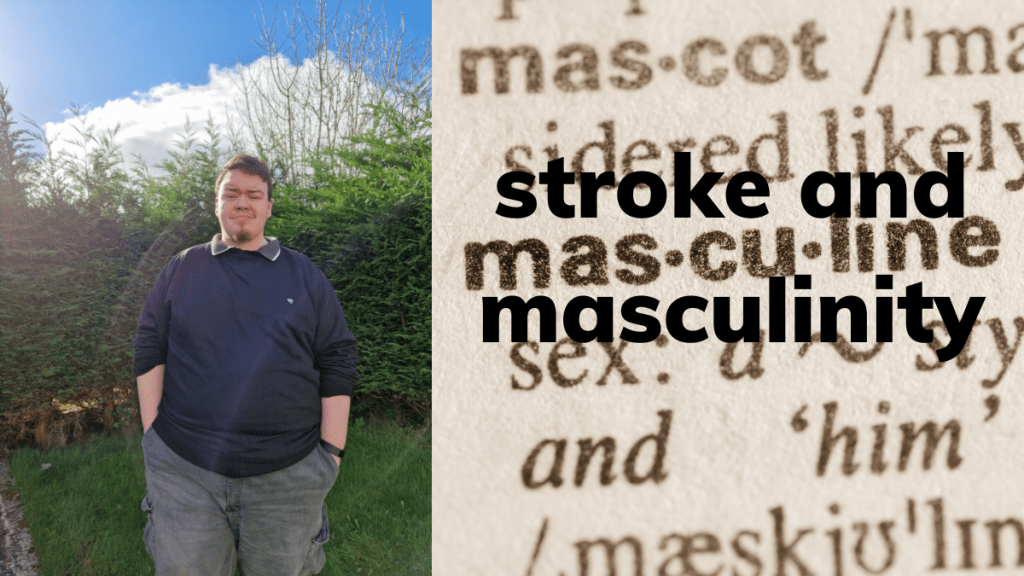
Rule 1: Be strong. Rule 2: Fix things. Rule 3: If you are hurt, rub some dirt on it and walk it off. Rule 4: Under no circumstances should you ever, ever admit that you are scared.
For twenty-two years, I followed this script. I was the protagonist of my own little movie—maybe not an action hero, but certainly the guy who could handle his own business. I played Hearthstone, I had plans, and I had a body that did precisely what I told it to do. I was invincible, in that specific, naïve way that only young men are invincible.
Then came Boxing Day. Then came the “drunkenness” without the drink. Then came the floor.
In the span of 48 hours, I went from a young man with his whole life ahead of him to a patient who needed a hoist just to get into bed. The script didn’t just get rewritten; it got shredded.
We talk a lot about the physical recovery from a stroke—the neuroplasticity, the physio, the sheer exhaustion of relearning to move. But we rarely talk about the other break that happens: the fracture in your identity. Specifically, for me, the fracture in my masculinity.
If a man’s worth is measured by his ability to stand on his own two feet (literally and metaphorically), who was I now that I couldn’t?
The Crash of the “Strong Man”
There is a moment I wrote about previously—falling off the bed in the hospital, hitting the floor with a crash, and realising my left side had simply resigned from the job of being a body.
In that moment, the “Strong Man” archetype didn’t just fail; it mocked me. The stoic (lower-case ‘s’) idea of “sucking it up” is useless when your brain is bleeding. You can’t willpower your way out of a hemiplegic stroke. You can’t “rub dirt on it.”
For the first few weeks, I felt a distinct type of anger. I was angry at the misdiagnosis (low sodium? Really?), I was furious at the guy in the bed next to me who wouldn’t stop screaming, but mostly, I was angry at my own helplessness.
I was stuck in what Tim Urban might call the “Primitive Mind.” My primitive brain was screaming “DANGER! VULNERABILITY! FIX IT!” but my Higher Mind knew there was no quick fix. This clash created a deep, simmering resentment. I felt like I had been demoted from “Adult Male” to “Dependent Child.”
I remember thinking: If I can’t provide, if I can’t protect, if I can’t even walk to the toilet, am I still a man?
It’s a dark question. But it’s one that I think many men in recovery face, staring at the ceiling at 3 AM.
Finding a New Operating System
I realised pretty quickly that my old operating system—the one built on brute force and independence—was crashing. I needed a patch. I needed a new way of thinking.
Being a fan of digging into ideas (whether it’s listening to Destiny debates or reading about the “gamification of life”), I started looking for a philosophical framework that could handle the weight of what I was going through.
I stumbled—metaphorically, of course—into Stoicism.
Now, I don’t mean the “stiff upper lip” British stoicism where you repress your emotions until you explode. I mean the actual philosophy of Marcus Aurelius, Seneca, and Epictetus.
Epictetus, a man who was born a slave and had a crippled leg (sound familiar?), said something that became my anchor:
“Make the best use of what is in your power, and take the rest as it happens.”
This is the Dichotomy of Control.
Things I cannot control:
- The fact that I had a stroke at 22.
- The speed of my neural repair.
- The noise the guy in the next bed makes.
- The past.
Things I can control:
- Doing my physio reps today.
- My attitude towards the nurses.
- What I read and think about.
- How I frame this narrative.
This shift was massive. It moved me from a victim of circumstance to an active participant in a system.
Goals vs. Systems
In the early days, I was obsessed with Goals.
- Goal: Walk perfectly by my birthday.
- Goal: Get out of the hospital in one week.
The problem with goals in stroke recovery is that your body doesn’t care about your timeline. When you miss a goal, you feel like a failure. You feel weak.
So, taking a page from James Clear’s Atomic Habits, I stopped focusing on the goal and started focusing on the System.
A system is just a repeated behaviour that leads to a result.
- System: Attempt to move my left foot for 5 minutes every hour.
- System: Read one page of philosophy when I feel anxious.
- System: Write down one small win every evening.
If my goal was “Walk,” I failed every day for a long time. If my system were “Do the reps,” I would win every single day.
This rebuilt my confidence. It wasn’t the loud, chest-thumping confidence of my teenage years. It was a quieter, steadier confidence. It was the confidence of knowing that I showed up.
Redefining Masculinity
Through this process, I’ve had to rewrite that script I was handed at age five.
I’ve realised that “Masculinity” isn’t about being an indestructible object. Indestructible objects are brittle; if you hit them hard enough, they shatter.
True resilience—and I’d argue, true masculinity—is antifragile. It’s about being like water or muscle. You tear it down, and it grows back differently.
I am not the same physical specimen I was before. I have to plan my energy. I have to ask for help (which, for the record, requires more courage than doing it yourself ever did).
But I have found a new kind of strength.
- Strength is admitting you are terrified and doing the physio anyway.
- Strength is finding humour in the absurdity of the situation—like joking about wanting the lottery numbers along with the stroke prediction.
- Strength is patience.
Mark Manson talks about the “Subtle Art of Not Giving a Fck,” and stroke recovery is the ultimate crash course in that. You learn very quickly to stop giving a fck about looking cool, or looking “normal,” or what strangers think of your gait. You save your f*cks for the things that matter: Your recovery. Your family. Your mind.
The Long Road Ahead
I won’t lie to you and say I’ve reached the end of this road. There are still days when I get frustrated, when the old “Why me?” tape plays in my head, and when I miss the ease of my old life.
But I have a map now.
I have a philosophy that tells me my value isn’t in my physical perfection, but in my character. I have a system that ensures I make progress, even if it’s microscopic. And I have a definition of manhood that allows me to be vulnerable without being weak.
To anyone else walking this road—especially the men who feel like they’ve lost their shield—I say this:
The shield was heavy anyway. Put it down. Build a fortress inside instead.
Walk with me.
If you enjoyed this post, please give me a like, follow, and turn on notifications.
 The Long Road Ahead
Leave a comment