If you were to graph the trajectory of a typical 22-year-old’s life, the line usually points up and to the right. You are acquiring skills, you are gaining freedom, and you are acquiring the ability to eat a sandwich without thinking about the complex biomechanics required to lift it to your mouth.
Seven years ago, at 22, my graph didn’t just dip; it fell off the table.
I had a stroke. In the blink of an eye, the independence I had spent two decades accumulating evaporated. I went from being a young adult with the world at my feet to someone who felt scared, vulnerable, and unsure if I’d ever be “me” again.
If you are a stroke survivor or caring for one, you know the feeling. It’s like waking up in the cockpit of a plane you were flying, only to find the controls have been rearranged and half the buttons don’t work.
But here is the spoiler alert for this post: I got the plane back in the air.
It has been seven years. Today, I live alone. I drive a car. I walk without assistance. The road from there to here wasn’t a straight line, and it certainly wasn’t a montage scene from a Rocky movie. It was a grind. But it taught me a fundamental truth about restoring independence:
Independence isn’t something you find; it’s something you build. Brick by boring brick.
Here is what the long road ahead actually looks like, and how you can navigate the journey from total dependence to regaining your life.
Phase 1: The “Baby” Phase (Accepting the Reset)
Let’s be honest for a second: The beginning sucks.
Immediately following my stroke, my left arm and leg decided they were going on an indefinite strike. They were there, attached to my body, but they had stopped taking my calls. This meant I had to relearn everything. And I do mean everything.
Walking. Dressing. Eating.
When you are 22, you shouldn’t have to think about how to put on a sock. But suddenly, putting on a sock became a strategic operation requiring the focus of a bomb disposal expert.
At this stage, your independence meter is at 0%. This is the most challenging psychological hurdle. You look at the gap between what you could do yesterday and what you can do today, and that gap looks like the Grand Canyon.
The trap here is waiting for the “Old You” to come back. But as I lay in that hospital bed, I realised that waiting is passive. Stroke recovery is active.
I had to accept a harsh reality: To become independent again, I first had to accept being dependent. I had to let people help me. I had to let the nurses, the physios, and my family do the things I couldn’t, so I could save my energy for the one thing that mattered—the work.
Phase 2: The Compound Interest of Recovery
James Clear talks a lot about the power of atomic habits—small improvements that compound over time. There is no better example of this in nature than stroke rehabilitation.
When I started physiotherapy and occupational therapy, the progress was invisible. I would spend an hour trying to get a signal from my brain to my left big toe. Nothing.
Day 2: Nothing.
Day 3: Twitch.
Most people quit (or mentally check out) because they don’t see immediate ROI. We live in an Amazon Prime world; we want our recovery delivered next-day. But neurology doesn’t work like that. Neurology works on compound interest.
The Formula for Neuroplasticity:
$$\text{Focused Repetition} + \text{Time} + \text{Rest} = \text{New Neural Pathways}$$
I treated my therapy not as a medical requirement, but as a job.
- The Input: I dedicated myself to the exercises my therapists gave me.
- The Mindset: I celebrated the microscopic wins.
If I could move my finger 1 millimetre further than yesterday, that was a champagne moment. Why? Because if you can move it 1 millimetre, you can eventually move it 2. If you can move it 2, you can eventually hold a fork. If you can hold a fork, you can eat dinner alone.
Every repetition was a vote for the person I wanted to become. It was the long road ahead, sure, but the only way to shorten the road was to keep walking it.
Phase 3: The Invisible Battle (Mental Health)
We need to talk about the part of the stroke that doesn’t show up on an MRI scan.
You can do all the leg lifts in the world, but if your mind is stuck in a dark room, you aren’t truly recovering. Following the stroke, I struggled with depression and anxiety. It makes sense, doesn’t it? Trauma does that. Grieving the loss of your “healthy” self does that.
For a while, I tried to “tough it out.” (Spoiler: This does not work.)
I eventually sought support from mental health professionals. This was a crucial pivot point. I utilised counselling and medication to stabilise the chemical and emotional storm in my brain.
There is a weird stigma, especially among men, that asking for mental help is a weakness. I would argue it’s the ultimate form of strategy. If you were climbing Everest, you wouldn’t say, “I don’t need oxygen, I’ll just hold my breath.”
Therapy was my oxygen. It helped me stay positive. It helped me reframe my anxiety from “I can’t do this” to “I can’t do this yet.”
Key Takeaway: You cannot build a skyscraper on a swamp. You have to stabilise the foundation (your mind) before you can create the structure (your body).
Phase 4: The Village (You Can’t Do It Alone)
There is a paradox in restoring independence: You need other people to help you become self-sufficient.
My family and friends were the scaffolding that held me up while I was under construction. They were there for the emotional breakdowns and to help with the physical tasks I couldn’t manage.
But I also needed a different kind of tribe. I needed people who got it.
I connected with other stroke survivors through support groups. This was a game-changer. Your friends love you, but they don’t know what spasticity feels like. They don’t know the specific fatigue that hits you at 2:00 PM on a Tuesday.
Finding a community gave me a sense of belonging. It validated my struggle. It reminded me that I wasn’t the only one walking this path. If you are reading this and feel isolated, finding your “tribe” is the highest-leverage action you can take this week.
Phase 5: The Final Boss (Re-entering the Workforce)
So, here we are. Seven years later. I can walk. I can drive. But there is one final frontier I am currently navigating: The Job Market.
Re-entering the workforce after a massive health event is terrifying. It brings up a specific set of insecurities:
- Will they see my stroke as a weakness?
- Can I compete with someone who hasn’t lost seven years of “hustle”?
- What if I get tired?
I am currently working with job coaches and spending hours on YouTube (the University of the 21st Century), learning how to present myself.
Here is the shift in perspective I’ve had to make: My stroke is not a bug; it’s a feature.
Think about it. Employers say they want “resilience,” “adaptability,” and “problem-solving skills.”
- Resilience: I learned to walk again.
- Adaptability: I relearned how to live with one-sided weakness.
- Problem-solving: I navigate a world not designed for me every single day.
I am learning to present myself authentically. I am not hiding the stroke; I am highlighting the strength it took to overcome it. I will land a job that allows me to work to the best of my capabilities and at my own pace, not despite the stroke, but with the wisdom gained from it.
The View from 7 Years Out
If I could go back and talk to that scared 22-year-old in the hospital bed, I would tell him to breathe.
Today, 7 years after the day everything changed, I have regained my independence.
- I walk without assistance.
- I drive my own car.
- I live alone.
Are there limitations? Yes. I have to be mindful of my health. I have to manage my energy. I am not “cured” in the sense that it never happened, but I am “healed” in the sense that it no longer defines my limits.
The journey of a stroke survivor is not about getting back to exactly who you were. It’s about becoming someone new—someone stronger, more patient, and infinitely more grateful.
Restoring independence is possible. It requires the right Mindset, a lot of help, and the stubborn refusal to give up.
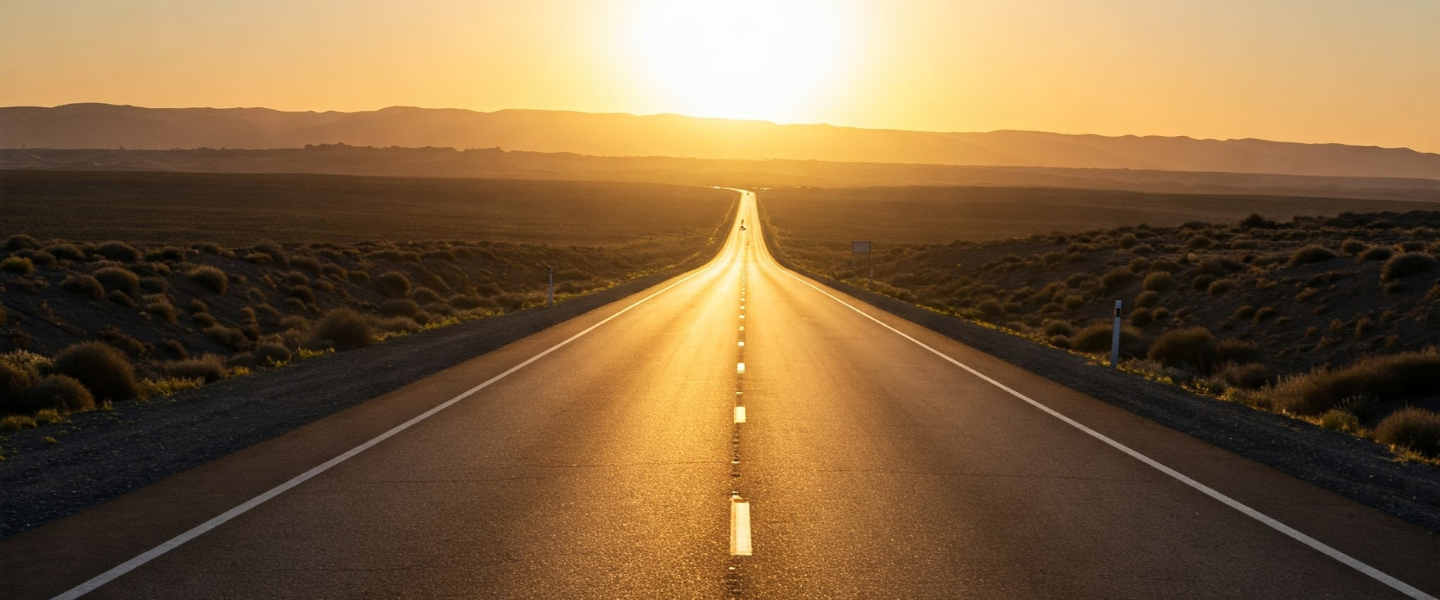
It is a long road ahead. But the view from here? It’s pretty good.
Actionable Steps for Restoring Independence
If you are currently looking up at the mountain, here is how you start climbing:
- Define Your “Independence”: What does it look like for you? Is it walking to the bathroom? Is it cooking a meal? Pick one target.
- Use the “1% Rule”: Do not try to fix everything today. Try to improve one function by 1% this week.
- Build Your Team: Don’t ghost your friends. Tell them what you need. Find a support group (online or offline).
- Prioritise Mental Health: If you feel the darkness creeping in, treat it with the same urgency as a physical symptom. Get help.
- Document the Wins: Keep a journal. When you feel like you aren’t making progress, look back at where you were three months ago.
Keep moving forward.
 The Long Road Ahead
Leave a comment