
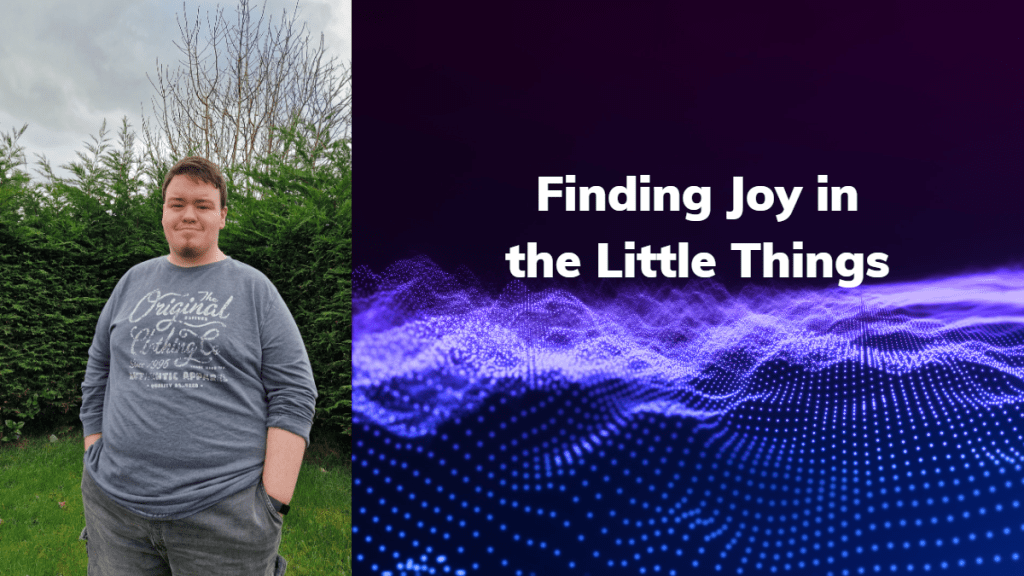
Life has a funny way of dealing you a hand you never expected.
Sometimes it’s a Royal Flush; other times, it’s a handful of mismatched cards that don’t have any synergy at all. eight years ago, at just 22, life dealt me the latter.
I suffered a stroke that wiped out the function in my left arm and leg. In an instant, the “game” I was playing—the active, carefree life of a young man—was over. The rules had changed, the board had been flipped, and I was left staring at the pieces, wondering if I’d ever be able to play again.
If you’ve read my previous posts about The Day Everything Changed, you know the early days were dark. I was devastated. I couldn’t hold a pencil. I struggled to walk. The silence of the hospital room was deafening, filled only by the terrifying question: Is this it?
But as I lay there, staring at the ceiling, I realised I had two choices. I could fold, or I could start theorycrafting a new deck.
And that’s when I learned the most important lesson of my recovery: finding joy in the little things isn’t just a cliché; it’s a survival strategy.
The Compound Interest of Joy
James Clear often talks about the idea of atomic habits—how minor, 1% improvements compound over time to create massive change. I realised that joy works the same way.
When you’re at rock bottom, you don’t find happiness in the significant, sweeping milestones because they feel lightyears away. You can’t focus on “running a marathon” when you can’t even wiggle your big toe. If you only wait for the “big wins” to feel good, you’re going to be miserable for a very long time.
Instead, I had to look for the pennies.
I remember the first time I successfully brushed my teeth without help. To anyone else, this is a non-event. It’s a mundane chore you do while half-asleep. To me? It was climbing Everest. It was a dopamine hit that proved I can still do things.
I started collecting these small wins like they were rare loot drops:
- The Physical Wins: combing my hair, buttoning a shirt. The first time, my left leg took weight without trembling.
- The Creative Wins: I took up painting. Now, let’s be real—I created some absolutely terrible works of art using just my right hand. We’re talking “toddler with a sugar rush” levels of quality. But the act of creating? That was pure joy.
- The Intellectual Wins: Writing. I discovered I had a knack for it, a way to get the swirling thoughts out of my head and onto the screen.
Each of these small joys compounded. They built a foundation of confidence that allowed me to tackle the more complicated stuff.
The Yu-Gi-Oh Theory of Rehabilitation
Now, here is where I’m going to nerd out for a second. (You’ve been warned).
Since I was a kid, one of my absolute biggest joys has been collecting Yu-Gi-Oh cards and theorycrafting decks. For the uninitiated, this isn’t just slapping cards together; it’s a complex puzzle of synergy, probability, and counter-play. You have to look at a card and think, “How does this interact with that? What is the win condition?”
Believe it or not, this kept my brain ticking when my body wouldn’t.
In the hospital, and later at home, when I couldn’t move much, my mind would drift to deck builds. I’d mentally shuffle through combos. If I play this trap card here, it protects my monster next turn.
I started to realise that stroke recovery is just one giant deck-building exercise.
- The Meta: My new physical limitations.
- The Strategy: Physical and Occupational Therapy.
- The Win Condition: Independence.
I couldn’t just “play” the way I used to. I had to adapt my strategy. I had to find new combos to do basic tasks. Okay, I can’t tie my shoes the usual way. What’s the workaround? What’s the “trap card” I can set to make this easier?
Keeping my brain engaged with the logic and nostalgia of Yu-Gi-Oh was a lifeline. It gave me a space where I wasn’t “the stroke survivor”—I was just a duelist building a strategy. It reminded me that while my hardware (my body) was glitching, my software (my mind) was still sharp.
The “Tim Urban” Moment: Zooming Out
Tim Urban from Wait But Why likes to visualise life as a grid of weeks. When you look at the grid, you realise how much time we spend worrying about things that don’t matter.
Before my stroke, I spent a lot of my “grid” worrying about the future, stressing about careers, or what people thought of me. The stroke forced a hard zoom-in. Suddenly, my entire universe was the four walls of a rehab room.
But strangely, this forced perspective made the world more beautiful.
When you lose the ability to rush through life, you are actually forced to look at it.
- I started watching the sunsets, really watching them. Not just snapping a photo for Instagram, but sitting there and watching the colours shift from orange to purple.
- I listened to the birds chirping outside my window.
- I found deep, resonant joy in just sitting with loved ones: no phones, no distractions, just presence.
I realised that joy isn’t something you chase; it’s something you notice. It’s been there the whole time, hiding in the background noise of our busy lives. It took the silence of recovery for me to hear it finally.
The Subtle Art of Not Giving a… (You Know)
Mark Manson famously wrote about The Subtle Art of Not Giving a F*ck. His point wasn’t about being indifferent; it was about being selective with your cares.
Recovery taught me this lesson the hard way. I used to care about looking cool or being the most capable person in the room.
Stroke Recovery Rule #1: You have to stop caring about looking silly.
Rehab is undignified. You fail repeatedly in front of strangers. You wobble. You drop things. If I had held onto my old ego, I would have quit. I had to learn to laugh at the absurdity of it all.
I remember trying to paint with my non-dominant hand and making a mess that looked like an explosion in a condiment factory. Old me would have been embarrassed. New me? I laughed. I found joy in the absolute disaster of it.
Life is going to be challenging. That is a guarantee. There will be “downs” that feel like they are going to crush you. But if you can learn to laugh at the chaos, if you can pivot your mindset from “Why is this happening to me?” to “How do I build a deck to beat this?”, you win.
The Long Road Ahead
It has been eight years since the day everything changed.
I still have limitations. My left side doesn’t always cooperate. There are days when the fatigue hits me like a freight train, and I want to stay in bed.
But then I see a new Yu-Gi-Oh set is releasing, or I see a charming sunset, or I write a sentence that perfectly captures how I’m feeling, and I remember: I am still in the game.
Life is not about waiting for the storm to pass (because, let’s be honest, in Northern Ireland, the storm never passes). It’s about learning to dance in the rain—or at least, learning to hobble through the puddles with a smile on your face.
Finding joy in the little things isn’t just a coping mechanism; it’s the secret to a happy life. Whether it’s adapting to a new reality, discovering a talent for terrible painting, or simply appreciating the fact that you are here to witness another day, there is always, always a move you can make.
So, look at your hand. It might not be the one you wanted. But it’s the one you have.
Play it well.
If you enjoyed this post, check out my other reflections on recovery and resilience:
 The Long Road Ahead
Leave a comment