
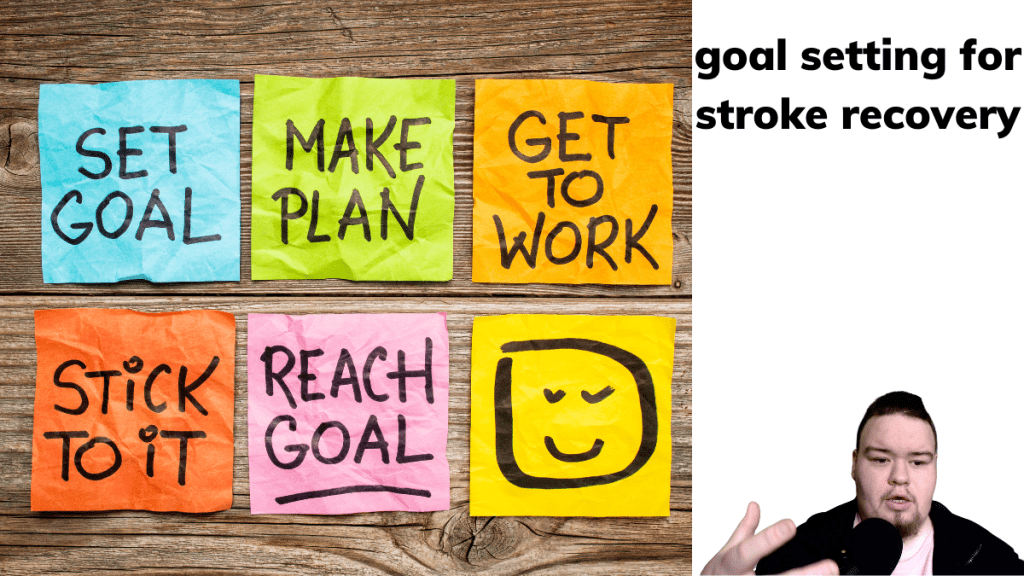
First of all, Happy 2025! As we are starting the new year off, I want to give you the motivation to start it right! and throw out a thesis on why you should set goals for yourself and the importance of having goals from a stroke survivor’s perspective.
Imagine recovering from a stroke like climbing a mountain. It’s a daunting task, with an unclear path and plenty of obstacles along the way. Imagine trying to climb that mountain without a map, compass, or even a clear idea of where the summit is. Sounds pretty overwhelming, right?
That’s where goal setting comes in. It’s the compass and map for your stroke recovery journey, guiding your steps, keeping you motivated, and helping you celebrate those hard-earned victories along the way.
Why Bother with Goals? The Benefits Beyond the Buzzword
Goal setting isn’t just some motivational fluff. It’s a powerful tool that can significantly impact your stroke recovery:
- Improved Outcomes: Studies show that stroke survivors who actively participate in setting their own goals tend to have better rehabilitation outcomes. They’re more likely to regain lost functions, improve their quality of life, and return to the activities they love.
- Enhanced Autonomy: Setting goals gives you a sense of control over your recovery journey. It empowers you to make choices, take ownership of your rehabilitation, and actively participate in shaping your future.
- Motivation Boost: Let’s face it, stroke recovery can be a long and challenging process. Goals provide a sense of purpose, and a reason to keep pushing forward even when things get tough. They break down the overwhelming task of recovery into smaller, more manageable steps, making the journey less daunting and more achievable.
- Self-Efficacy Superhero: Setting and achieving small goals can boost your self-confidence and belief in your ability to recover. This sense of self-efficacy is crucial for staying motivated and overcoming challenges along the way.
- Mastering Self-Regulation: The process of setting and working towards goals helps you develop essential self-regulation skills, such as planning, problem-solving, and self-monitoring. These skills are crucial for your stroke recovery and navigating life’s challenges beyond rehabilitation.
SMART Goals: Your Recovery Roadmap
So, how do you set practical goals? Remember the acronym SMART:
- Specific: Your goals should be clear and well-defined. Instead of saying “I want to walk better,” say “I want to walk 100 meters without assistance in three months.” in my case it was 15 metres in three months and i barely achieved that when i left the hospital.
- Measurable: You need to be able to track your progress. Use objective measures like distance walked, number of repetitions, or time taken to complete a task.
- Achievable: Your goals should be challenging but realistic. Don’t set yourself up for failure by aiming for something unattainable in your current condition.
- Relevant: Your goals should be meaningful to you and align with your interests and priorities. If you love gardening, set goals for regaining the strength and dexterity needed to tend to your plants.
- Time-bound: Give yourself a deadline to create a sense of urgency and motivation.
Teamwork Makes the Dream Work: Involving Your Support System
Stroke recovery is not a solo mission. Involve your family and friends in your goal-setting process. Share your objectives, celebrate your achievements, and let them be your cheerleaders along the way. Their support and encouragement can make a world of difference.
Tracking Progress and Celebrating Victories
Keep track of your progress, no matter how small. Use a journal, a calendar, or even a mobile app to monitor your achievements. And don’t forget to celebrate those victories! Every step forward, every milestone reached, deserves recognition. As an aside, I use Daylio to track things in my life, and yes, I mean even the achievements.
Avoiding the Goal-Setting Pitfalls
Be mindful of common pitfalls like setting unrealistic goals, comparing yourself to others, or neglecting to adjust your goals as your condition changes. Stroke recovery is dynamic, and your goals should evolve with you.
Goal Setting: Your Compass and Map for a Brighter Future
Goal setting is more than just a technique; it’s a mindset. It’s about taking ownership of your recovery, embracing challenges, and believing in your ability to achieve a brighter future. So, grab your compass and map, set those SMART goals, and embark on your journey towards a fulfilling life after your stroke.
If you enjoyed this post, please give me a like, follow and turn on notifications.
 The Long Road Ahead
Leave a comment